In today’s fast-changing digital world, small businesses are always looking for ways to get noticed online. For years, traditional SEO was key to getting high rankings on search engines like Google.
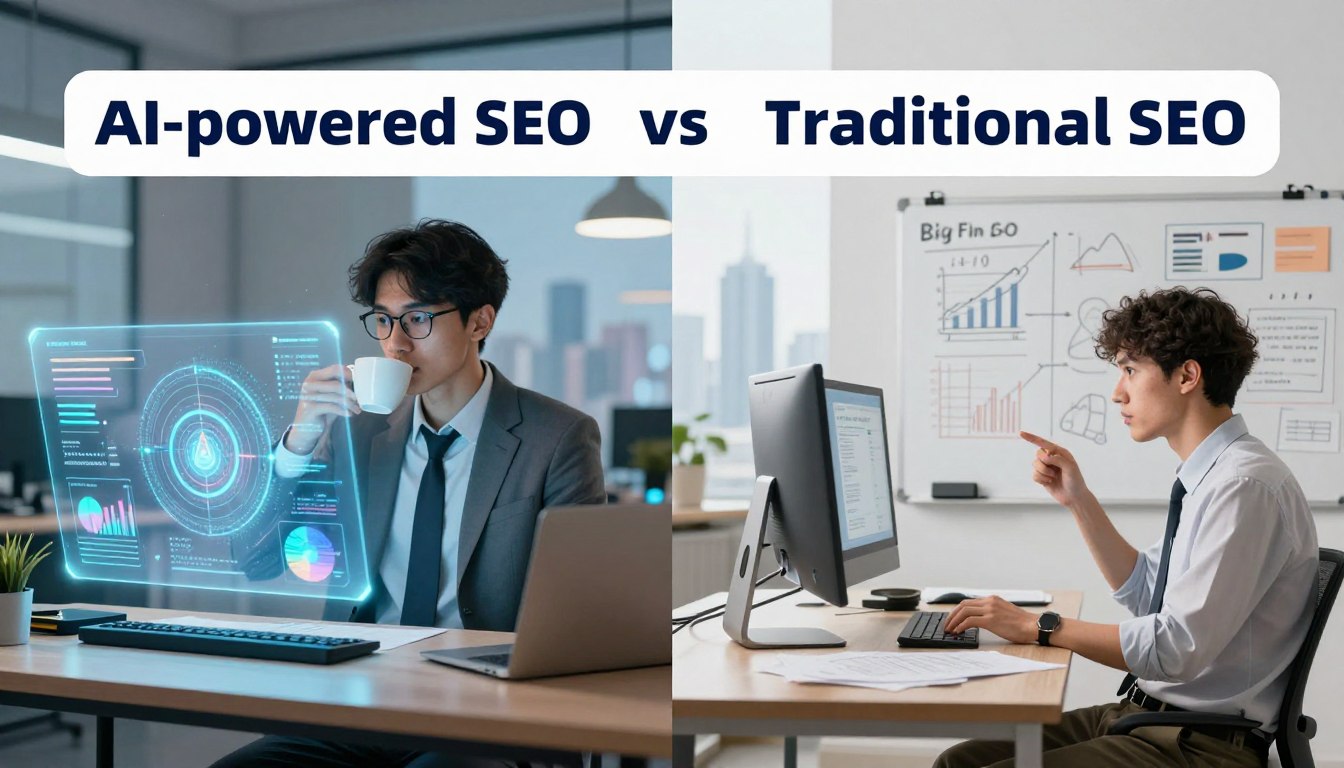
But now, artificial intelligence has brought a new era of SEO. This new approach uses automation, data analysis, and predictive modeling to get results faster and better. As a small business owner, you must decide: stick with traditional SEO or try the new AI-driven method.
We’ll look at the differences between AI-powered SEO and traditional SEO. We’ll help you choose the best strategy for your small business. We’ll consider the current digital world and how SEO is changing.
The Evolving SEO Landscape for Small Businesses
The world of SEO is changing fast, bringing both challenges and chances for small businesses. It’s key to grasp the current hurdles and chances in this digital world.
Current Digital Challenges Facing Small Businesses
Small businesses today face many digital hurdles. They must stay visible in a busy online space, keep up with quick tech changes, and compete with bigger brands that have more money.
- Maintaining a strong online presence
- Adapting to algorithm updates
- Competing for local search visibility
The Critical Role of Search Visibility in Local Markets
Search visibility is crucial for small businesses in local markets. It’s not just about being seen; it’s about being seen by the right people at the right time.
Competition with Larger Brands
One big challenge small businesses face is competing with bigger brands. These larger companies often spend more on SEO, making it tough for smaller ones to rank high in search results.
“The key to success lies not in competing directly with larger brands but in leveraging local SEO strategies that play to your strengths.”
Post-Pandemic Search Behavior Changes
The pandemic has changed how people search online, with more looking for local goods and services. This change offers a chance for small businesses to grab local search traffic by tweaking their SEO.
By understanding these challenges and opportunities, small businesses can better handle the changing SEO world. They can also boost their search visibility in local markets.
Understanding Traditional SEO Fundamentals
For small businesses, knowing traditional SEO basics is key. It helps make a website more visible in search results. This is done by making it easier for search engines to find and rank content.
Core Components of Manual SEO Strategies
Manual SEO strategies have three main parts: on-page, off-page, and technical SEO. On-page optimization makes web pages rank better. This includes keyword research, creating content, and optimizing meta tags.
Human-Driven Optimization Techniques
Creating content that people enjoy is vital in traditional SEO. It’s also important to get high-authority backlinks through networking.
“The best content is that which is written for humans, not just search engines.” –
Resource Requirements for Effective Implementation
Doing traditional SEO well takes a lot of resources. You need time and skills.
Time Investment Considerations
Small businesses must think about the time needed for SEO. This includes time for keyword research, content creation, and link building.
Skill Development Needs
Skills are also important. Businesses need to learn about content creation, technical SEO, and analytics. This helps in using SEO strategies well.
By grasping these basics, small businesses can handle SEO better. This improves their online presence.
The AI-Powered SEO Revolution
Small businesses can now use AI to outdo their rivals. This new way of optimizing search engines is changing the digital world. It helps businesses get seen more and rank higher.
Defining Modern AI-Enhanced Search Optimization
AI-enhanced search optimization uses artificial intelligence and machine learning. It makes SEO easier for small businesses to keep up with big ones. AI SEO looks at lots of data to find patterns humans might miss.
Key Technologies Transforming SEO Practices
The main technologies behind AI-powered SEO are machine learning, natural language processing, and predictive analytics. Together, they create a smarter and more effective SEO plan.
How Machine Learning Interprets Search Intent
Machine learning is key in understanding what users want. It looks at how people search and behave. This helps businesses make content that really speaks to their audience.
Natural Language Processing Applications
Natural language processing (NLP) lets computers get what humans mean. In SEO, NLP helps find the right keywords and phrases in content.
Predictive Analytics in Search
Predictive analytics looks at past data to guess future trends. It helps businesses stay one step ahead. They can adjust their SEO plans to keep up.
Budget Considerations: Traditional vs AI-Powered Approaches
Choosing between traditional SEO and AI-powered SEO is a big decision for small businesses. It’s not just about the tech; it’s also about the money. We need to understand how each option affects our budget.
Initial Investment Requirements for Small Businesses
Small businesses face big upfront costs for SEO. Traditional SEO needs a lot of money for things like keyword research and content creation. On the other hand, AI-powered SEO costs more at first because of the technology needed.
Here are some key initial investment considerations:
- Traditional SEO: Hiring SEO specialists, content creators, and link builders
- AI-powered SEO: Investing in AI technology, software subscriptions, and potential custom development
Monthly Operational Costs Comparison
After the initial cost, monthly expenses can really add up. Traditional SEO keeps needing people for content and optimization. AI-powered SEO might save some money but still has subscription and maintenance costs.
Key monthly operational costs to consider:
- Content creation and optimization expenses
- SEO tool subscriptions
- Reporting and analysis costs
Long-Term Financial Impact Assessment
Looking at the long-term, we must think about the return on investment (ROI). Traditional SEO can be very profitable, but AI-powered SEO might offer better growth and flexibility. This could mean more benefits over time.
Scalability Cost Factors
As businesses grow, their SEO needs change. AI-powered SEO is great for scaling because it’s flexible and doesn’t cost as much. Traditional SEO, though, might need more people to grow.
Scalability cost factors to consider:
- Ability to handle increased content demands
- Flexibility in adjusting keyword strategies
- Capacity to incorporate new SEO trends and technologies
Time Efficiency: Why AI-Powered SEO Benefits Resource-Limited Businesses
The digital marketing world is getting more competitive. Small businesses must find efficient SEO solutions to keep up. AI-powered strategies are key for businesses with limited resources.
Automation of Time-Consuming SEO Tasks
AI-powered SEO automates tasks that take a lot of time. It analyzes websites, finds technical SEO issues, and suggests fixes. This saves a lot of time compared to manual efforts.
Real-Time Optimization Capabilities
AI tools watch a website’s performance live. They make quick changes when search engine rules or trends shift. This keeps a business’s online presence sharp and competitive.
Implementation Timeline Differences
SEO strategy implementation times vary. AI-powered SEO is faster, offering quick-win opportunities to boost website visibility quickly.
Quick-Win Opportunities
AI SEO finds and fixes easy problems fast. This is great for new businesses or those looking to refresh their online image.
Long-Term Strategy Development
AI SEO also crafts long-term strategies for ongoing success. It analyzes trends to help businesses keep and grow their online presence.
Content Strategy Development: Traditional Methods vs AI Assistance
In today’s digital world, small businesses face a big choice. They must pick between old-school SEO methods and new AI tools for making content plans. This choice greatly affects how visible they are online and how they compete.

Keyword Research Methodology Comparison
Old-school SEO looks for keywords people type into Google. But AI SEO goes further, looking at what users ask AI tools. AI can understand many ways people ask the same thing, thanks to “query fan-outs.”
- Traditional SEO focuses on specific keywords and phrases.
- AI-assisted SEO considers a broader range of search queries, including long-tail and conversational phrases.
- AI tools can analyze vast amounts of data to identify relevant keywords and topics.
Content Creation and Optimization Approaches
Creating content is key to any SEO plan. Old methods use human creativity and research. But AI can make this better with data insights.
- Traditional SEO: Human-driven content creation with manual optimization.
- AI-assisted SEO: Data-driven content suggestions and automated optimization.
Competitive Analysis Techniques
Knowing the competition is crucial for a good content strategy. Both old and new methods have their ways to analyze competitors.
Topic Clustering Strategies
Topic clustering groups related content around a main theme. AI can find the right topics and subtopics, making content clusters better.
Content Gap Identification
Finding gaps in content lets businesses make targeted content. AI can look at what competitors have and suggest improvements.
By knowing the differences between old and new content strategies, small businesses can choose wisely. This choice can boost their online presence and help them compete better.
Technical SEO Implementation Differences
In the world of technical SEO, old ways and new AI tools are changing how we make websites better. We’ll look at how site structure, making sites faster, and making them work well on phones are affected.
Site Architecture and Crawlability Optimization
Old SEO methods need manual work to make sites better. But AI tools use smart learning to improve sites automatically. They find problems that make search engines struggle to see a site’s content.
Performance Enhancement Techniques
Both old and new SEO methods focus on making sites run smoothly. But AI tools can change a site’s performance based on how users act. Old methods usually check sites less often.
Mobile Experience Optimization
Most searches happen on phones now. So, making sites work well on mobile is key. AI tools can adjust content and layout for different devices and user actions.
Schema Markup Implementation
Schema markup helps search engines get complex content. AI tools can make schema markup automatically. This makes sure a site’s markup is right and consistent.
Core Web Vitals Management
Core Web Vitals are important for rankings. AI SEO tools watch and improve these vitals live. This makes sites better for users and boosts rankings.
Local SEO Tactics for Small Business Growth
For small businesses, local SEO is key. It helps them show up in local searches. This way, they can reach more people in their area.
Google Business Profile Management Approaches
Managing your Google Business Profile well is important. You need to claim and optimize your listing. Make sure all details are correct and update your posts often to keep customers interested.
Local Citation Building Strategies
Getting listed on trusted sites boosts your visibility. We work on making sure your information is the same everywhere. This helps you rank better in local searches.
Review Acquisition and Management
Reviews are crucial for local SEO. We help get more positive reviews from happy customers. We also manage these reviews to keep your reputation strong.
Neighborhood Targeting Techniques
Focus on specific areas to attract local customers. Use location-specific keywords and content. This way, you can connect better with your audience.
Local Link Building Opportunities
Building ties with local businesses can get you valuable links. We find the right local links to improve your online authority and rankings.
Using these local SEO strategies, small businesses can grow. They can attract more local customers and improve their online presence.
Performance Tracking and Analytics Capabilities
Performance tracking and analytics are key to a good SEO strategy. They help us see how well we’re doing online. For small businesses, knowing these tools is vital to grow their digital presence.
Traditional SEO Measurement Methods
Traditional SEO uses well-known metrics to check success. These include:
- Organic traffic
- Keyword rankings
- Click-through rate (CTR)
- Conversion rates
These metrics are good but don’t give us the full picture of the digital world.
AI-Enhanced Data Interpretation
AI-powered SEO goes deeper by using smart data analysis. It looks at how users behave, predicts trends, and finds new chances.
Actionable Insight Generation
The best part of AI analytics is the insights it gives. It uses machine learning to suggest ways to better your SEO.
Attribution Modeling Differences
Attribution modeling is different with AI SEO. It can better understand today’s complex customer paths.
Competitive Benchmarking Tools
AI SEO also has better tools for comparing yourself to others. This helps find where you can get better.
Using these advanced tools, small businesses can make smart choices. They can improve their SEO and get more results.
Small Business Success Stories: AI-Powered SEO Transformations
AI has changed the game for small businesses online. It helps them get noticed and grow. With AI-powered SEO, small businesses can now shine online.
Case Study: Local Retail Business Breakthrough
A local retail business boosted their online traffic with AI-powered SEO. They used AI to make their website better. This drew in more customers who were actually interested in what they offered.
Case Study: Service-Based Business Growth
A service-based business improved their online presence with AI-powered SEO. They saw better rankings and more leads. It was a big win for them.
Measurable Outcomes and Realistic Timeframes
Businesses using AI-powered SEO see real results fast. They track things like:
- Improved search engine rankings
- Increased organic traffic
- Enhanced conversion rates
Traffic Improvement Metrics
AI-powered SEO helps track how well a site is doing. It shows how much more traffic comes in. It also helps understand what users like.
Conversion Rate Enhancements
AI also helps make websites better at turning visitors into customers. It looks at user data to make smart changes. This way, businesses can get more out of their website.
At PBJ, we mix human smarts with AI to get the best SEO results. This approach, called “Expert-Led, AI-Optimized Content,” works wonders. It’s not just about using AI for everything.
Potential Limitations and Considerations
AI-powered SEO has many benefits, but it also has drawbacks. Knowing these limitations is crucial for success. As we use AI tools to boost our SEO, we must watch out for risks and challenges.
AI Dependency Risks for Small Businesses
Small businesses with limited resources face risks from AI dependency. Relying too much on AI can make it hard to adjust to new changes or technical problems.
The Continuing Need for Human Expertise
Even with AI’s progress, human skills are still vital in SEO. Creativity and judgment are key for making good content strategies and understanding complex data.
Adaptation to Algorithm Changes
Search engines often update their algorithms. AI tools must quickly adapt to these changes. Small businesses need to keep up with these updates and adjust their strategies.
Data Privacy Concerns
AI SEO tools collect and analyze big data, raising privacy concerns. Businesses must follow privacy laws and be open with their customers.
Customization Limitations
AI tools are automated but have customization limits. Small businesses should know these limits and when to use human expertise to meet their goals.
By understanding these limitations, small businesses can create better AI-powered SEO strategies. They can balance technology’s benefits with the importance of human oversight and expertise.
Conclusion: Choosing the Right SEO Approach for Your Small Business
Small businesses face a changing digital world. They must pick the right SEO strategy to stay ahead. The future of SEO mixes AI’s power with human touch.
AI and traditional SEO work well together. They offer different strengths. By knowing what each can do, businesses can create a strategy that uses the best of both.
Understanding your business’s needs is key. A good SEO plan combines human ideas with AI’s speed. This way, businesses can grow and succeed in SEO.
Finding the right balance is crucial. The best SEO strategy blends AI’s efficiency with human creativity. This mix helps small businesses succeed in a tough digital market.
FAQ
What is the main difference between AI-powered SEO and traditional SEO?
AI-powered SEO uses advanced tech like machine learning to boost search rankings. Traditional SEO relies on manual analysis and human skills.
How does AI-powered SEO interpret search intent?
AI-powered SEO analyzes search data with machine learning. This helps it understand what users really want, leading to better search results.
What are the benefits of using AI-powered SEO for small businesses?
AI-powered SEO automates SEO tasks, optimizes in real-time, and boosts rankings. It’s a big help for small businesses.
How does traditional SEO differ from AI-powered SEO in terms of content strategy development?
Traditional SEO involves manual keyword research and content creation. AI-powered SEO uses AI to analyze competitors and optimize content.
What are the potential limitations of using AI-powered SEO?
Using AI-powered SEO can be risky if too dependent on AI. It also needs human expertise and adapting to algorithm changes.
How can small businesses measure the success of their SEO efforts?
Small businesses can track SEO success with traditional methods and AI-enhanced data. This gives them actionable insights.
What is the role of local SEO in small business growth?
Local SEO is key for small business growth. It helps businesses reach their local audience and improve rankings.
How can small businesses optimize their website for both traditional and AI-powered SEO?
Small businesses can optimize their site by improving architecture, performance, and mobile experience. This helps with both traditional and AI-powered SEO.
What is the initial investment required for AI-powered SEO?
The cost for AI-powered SEO varies based on tools and services. But, it can be more cost-effective than traditional SEO in the long run.
How can small businesses adapt to algorithm changes when using AI-powered SEO?
Small businesses can keep up with algorithm changes by staying informed about AI-powered SEO. They should adjust their strategies as needed.

Michael Fleischner is the founder of Big Fin SEO, a New Jersey-based local SEO agency helping service-area and multi-location businesses increase visibility, generate qualified leads, and drive measurable revenue from search.
He is a TEDx speaker, Amazon-published author of The 7 Figure Freelancer, and a frequent speaker on SEO, AI-driven marketing, and personal branding.

 Corine R.
 Laura A.
 Michael F.