
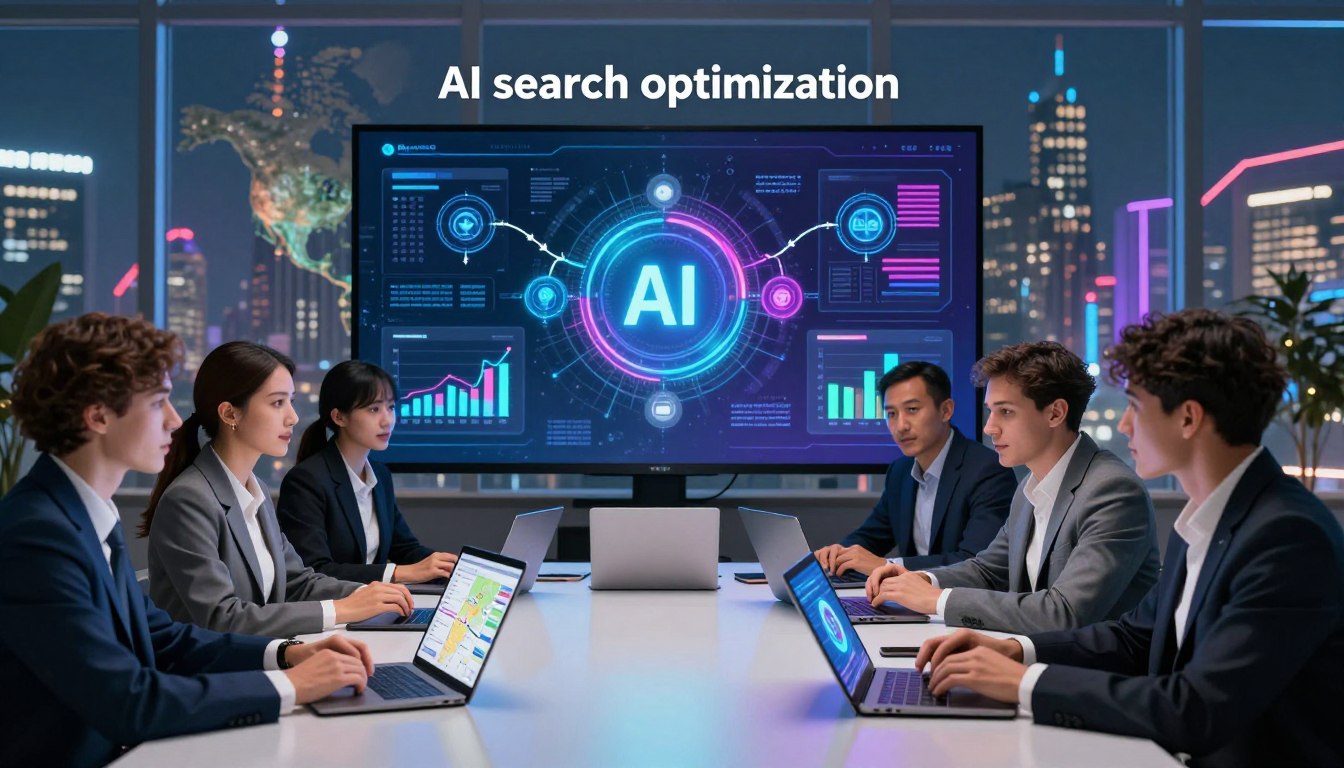
In the world of digital marketing, AI search optimization plays a big role. It has changed how businesses show up online. But, the tech behind geo platforms can be hard to grasp.
We’re leading the way in this tech change. It’s important to know if non-techies can use these tips. The answer depends on how well AI search optimization works and how easy its tips are to follow.
We want to help business leaders understand if they can use these tech tips. This way, they can make smart choices for their online presence.
The Growing Importance of AI-Powered Search Optimization
Digital marketing is always changing, and AI-powered search optimization is key to success. AI traffic jumped 527% from January to May 2025. Now, 89% of B2B buyers use generative AI when making purchases. This shows how important it is for businesses to use AI strategies to keep up.
The Evolution of Search Algorithms and Local SEO
Search algorithms have changed a lot, with AI being a big part of this change. Local SEO is now more important than ever as businesses try to reach their audience better. AI helps search algorithms give more accurate and personal results, making local SEO a key area for businesses to focus on.
Why Businesses Need AI-Driven Recommendations
AI-driven recommendations are now essential for businesses to stay competitive online. They offer insights that help businesses improve their online presence, engage with customers better, and increase sales. By using AI recommendations, businesses can make better decisions, simplify their marketing, and grow.
Demystifying Geo Platforms and Their AI Capabilities
Understanding geo platforms and their AI is crucial for modern search optimization. We’ll dive into the technical side and benefits of these platforms.
What Exactly Are Geo Platforms?
Geo platforms use AI to analyze and optimize content for local search. They help businesses show up in AI answers, boosting their online presence. With AI capabilities, these platforms offer insights to enhance local search.
Some key features of geo platforms include:
- Advanced data analytics
- AI-driven content optimization
- Local search result tracking
How AI Powers Modern Search Optimization
AI is key to modern search optimization. It powers geo platforms to quickly and accurately process data. This leads to more precise search results, giving businesses an edge. AI helps geo platforms:
- Analyze user behavior and search patterns
- Identify relevant keywords and content gaps
- Provide personalized search results
The Types of Recommendations These Systems Generate
Geo platforms offer various recommendations for businesses to improve online presence. They suggest content optimization, local listing management, and schema markup. By following these tips, businesses can boost their AI search results.
The types of recommendations typically include:
- Content and keyword optimization strategies
- Local listing and citation management tips
- Schema markup and structured data implementation guidance
Breaking Down the Technical Complexity Spectrum
Geo platforms offer a range of recommendations with different levels of technical complexity. These range from simple adjustments to advanced coding needs. It’s key to grasp the technical complexity spectrum for effective implementation of these recommendations.
Beginner-Friendly Recommendations
Some geo platform recommendations are easy for non-technical users to follow. These beginner-friendly suggestions focus on basic optimizations. They can greatly improve your search visibility.
Content Adjustments Anyone Can Make
Improving your search optimization starts with adjusting your content. This means:
- Using more relevant keywords in your content
- Optimizing meta titles and descriptions
- Improving the readability of your content
SEO expert Rand Fishkin says, “Content is king, but context is queen – and together, they can rule the search engine kingdom.” Content adjustments are a simple way to boost your online presence.
Simple Business Profile Optimizations
Optimizing your business profile is another easy task. This includes:
- Ensuring your business name, address, and phone number (NAP) are consistent across all platforms
- Adding high-quality photos to your profile
- Responding promptly to customer reviews
Intermediate Technical Suggestions
As you get more comfortable with basic optimizations, you’ll face intermediate technical suggestions. These might include basic schema markup or optimizing your website’s mobile responsiveness. These tasks are more challenging than beginner-friendly ones but don’t need advanced developer-level expertise.
“The key to successful SEO is not just about implementing technical changes, but understanding how they impact your business’s online visibility.”
Advanced Developer-Level Changes
At the other end are advanced technical recommendations that need significant developer expertise. These include complex schema implementations, advanced JavaScript rendering, or intricate website architecture changes. While these can offer big benefits, they often need professional technical help.
Understanding the technical complexity spectrum helps businesses assess their capabilities. It also helps them know when to seek additional support.
Common AI Recommendations from Geo Platforms Explained in Plain English
AI-driven recommendations from Geo platforms can change the game for businesses. They aim to boost online presence, improve search visibility, and increase revenue. This is a big deal for businesses looking to grow online.
We’ll make these AI suggestions easy to understand. This way, non-techies can use them to improve their online presence.
Content and Keyword Optimization
AI often suggests improving content and keywords. It’s about making your content high-quality and relevant. For example, if you’re a coffee shop in New York, use keywords like “coffee shop in New York” or “best coffee in NYC.”
To do this, create engaging content that meets your customers’ needs. Use the suggested keywords naturally in your website and social media.
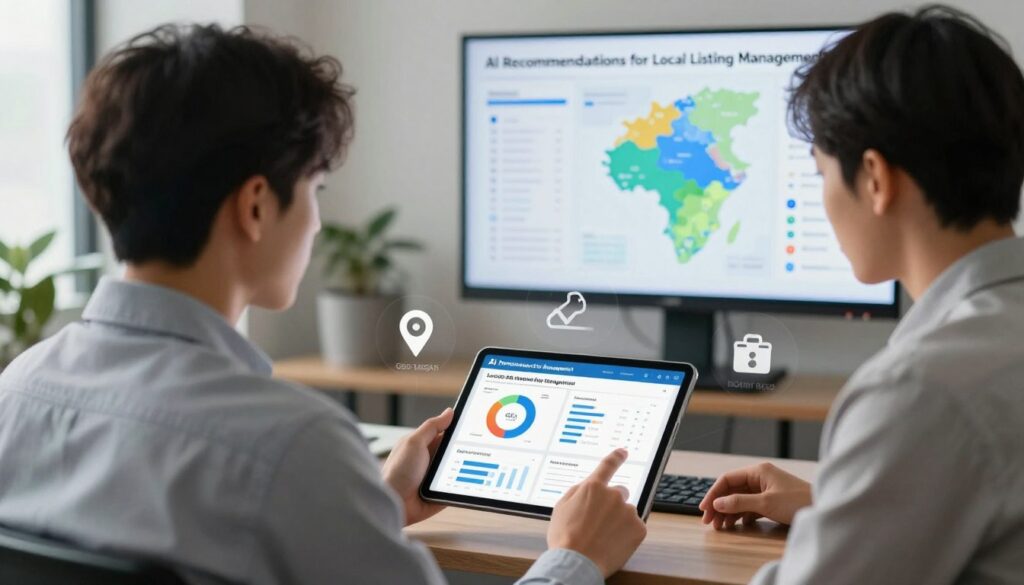
Local Listing and Citation Management
AI also stresses the need for accurate local listings. This means making sure your business is listed correctly on sites like Google My Business and Yelp. The AI will point out any errors or missing info that could harm your rankings.
To follow this advice, check and verify your business listings. Make sure your name, address, and phone number (NAP) are the same everywhere. Keep your listings up to date and respond to reviews quickly.
Schema Markup and Structured Data
Schema markup helps search engines understand your website better. AI might suggest adding it to highlight important details like business hours or reviews. Luckily, many website builders make it easy to add schema markup without coding.
User Experience and Mobile Optimization
AI also emphasizes the need for a good user experience and mobile optimization. This means your website should be easy to use, fast, and work well on mobiles. The AI might suggest making your site more user-friendly or optimizing images for mobile.
By following these AI suggestions, businesses can improve their online presence. This leads to more traffic and sales. It’s all about making your website a welcoming place for visitors.
Essential Tools That Bridge the Technical Gap for Non-Developers
Using AI for search optimization can seem hard for those who aren’t tech-savvy. But, the right tools can make it easier. The world of search optimization is full of technical terms and coding. Yet, there are tools and solutions to help non-developers use AI recommendations well.
User-Friendly SEO Dashboards and Interfaces
Today’s SEO platforms have become easier to use. Tools like Moz and Ahrefs have simple interfaces. They help users optimize their websites with ease.
These dashboards offer features like keyword research and content suggestions. They make complex information easy to understand.
No-Code Implementation Solutions
No-code solutions have changed how non-developers work with AI. Platforms like Wix and Squarespace have built-in SEO tools. Users can optimize their sites without coding.
These tools use drag-and-drop interfaces and visual editors. This makes it simple for non-technical users to make changes based on AI suggestions.
CMS Plugins and Extensions
Content Management System (CMS) plugins are key for non-developers. Platforms like WordPress and Joomla have many SEO plugins. Plugins like Yoast SEO and All in One SEO Pack offer features like automated meta tags.
These plugins help users follow AI-driven recommendations. They make optimizing websites easier.
By using these tools, non-developers can bridge the technical gap. Whether through dashboards, no-code solutions, or CMS plugins, finding the right tools is crucial.
Step-by-Step Implementation Guide for Non-Technical Users
We help non-technical users use AI-generated recommendations with our guide. It shows you how to set up your platform, understand AI suggestions, make changes easily, and track your progress.
Setting Up and Configuring Your Platform
To start, you need to set up your platform for AI recommendations. This means:
- Connecting your website or app to the AI platform
- Setting your preferences and options
- Checking that your data is correct and complete
By following these steps, you’ll get recommendations that fit your business goals.
Interpreting AI-Generated Recommendations
AI recommendations might seem hard to understand, but they’re meant to be useful. When looking at these suggestions, focus on:
- Getting the context and reason behind each idea
- Finding out what needs improvement
- Choosing the most important suggestions
This way, you can make smart choices and see real changes.
Implementing Basic Changes Without Coding
You don’t need to know how to code to use AI recommendations. You can make simple changes with:
- Easy-to-use SEO dashboards and interfaces
- No-code solutions
- CMS plugins and extensions
Tracking and Measuring Your Results
To see if AI recommendations work, you need to track and measure your results. Focus on:
- Watching important performance indicators (KPIs)
- Looking at data to spot trends and patterns
- Changing your plan based on what you learn
This way, you can improve your strategy and get the best return on investment.
Real-World Success Stories: Non-Developers Mastering Geo Platforms
We’ve seen how non-developers can excel on geo platforms, boosting their online presence. This success isn’t just for tech experts. It’s for anyone ready to learn and adapt. Real success stories show how businesses use geo platforms to reach their goals.
Small Business Case Study: Retail
A local retail store in the United States saw a 25% increase in foot traffic. They used a platform’s AI to improve their geo presence. The store owner, with no tech background, made changes easily. This led to a big sales increase.
Service Business Implementation Example
A law firm used geo platforms to get more local search visibility. They followed AI suggestions and saw a 40% increase in website traffic from local searches. The marketing manager, without coding skills, made the needed changes. This shows how accessible these tools are.
Measurable Results and Realistic Timeframes
Success stories from retail and service businesses show quick, measurable results. Non-developers can see big improvements in their online presence in weeks to months. For example, a business might see better local search rankings in 6-8 weeks. With ongoing optimization, they can see even more gains over time.
These examples prove that with the right tools and guidance, non-developers can master geo platforms. They can drive real results for their businesses.
When to Call in the Experts: Recognizing Your Technical Limitations
Knowing when to ask for help is key for businesses in the complex world of geo platforms. Using AI for search optimization is important. We must know our limits and ask for help when needed.
Red Flags That Indicate Developer Assistance Is Needed
There are signs that show it’s time to get developer help. These include:
- Complex schema markup that needs advanced coding
- Custom website changes that plugins or templates can’t handle
- Using AI with CRM or marketing systems
- Need for advanced data analysis or custom reports
Trying to tackle these issues without the right skills can harm our online image.
Cost-Benefit Analysis of DIY vs. Professional Help
It’s important to weigh the costs of doing it yourself versus getting professional help. DIY might seem cheaper at first, but it can:
- Take a lot of time and effort
- Lead to mistakes in using AI
- Limit how much we can grow
Professional help, on the other hand, offers:
- Expert skills for complex tasks
- Quick fixes for technical problems
- Flexible solutions that can grow with us
Considering these points helps us choose wisely, balancing immediate costs with long-term gains.
Finding and Briefing the Right Technical Partner
Once we decide we need professional help, finding the right partner is next. This means:
- Finding partners with AI experience
- Looking at their past work and case studies
- Telling them exactly what we need
- Checking how they solve problems and implement tech
By doing this, we make sure we work with someone who gets us and can improve our online presence with AI.
Conclusion: Empowering Non-Technical Users in the AI Search Optimization Landscape
As we move through the changing AI search optimization world, helping non-technical users is key to success. By using AI-driven tips from geo platforms, businesses can boost their online image.
We’ve looked at how AI helps with search optimization, from explaining geo platforms to giving guides for non-techies. The main point is that with the right tools and knowledge, anyone can use AI to grow their business.
By diving into AI search optimization and supporting non-technical users, companies can lead the way. They can get more customers and become industry leaders. We aim to help businesses improve their online presence and lead their markets with smart digital strategies.
FAQ
What are geo platforms, and how do they use AI for search optimization?
Geo platforms use AI to help businesses show up better in local search results. They analyze lots of data, like how people search and what businesses list. This helps them give useful tips to improve online visibility.
Can non-developers implement AI-driven recommendations from geo platforms?
Yes, many AI tips from geo platforms are easy for non-techies to follow. While some might need coding skills, most platforms offer simple tools. These make it easy for anyone to make changes and see improvements.
What types of recommendations do geo platforms typically generate?
Geo platforms suggest ways to make content better, manage local listings, and improve user experience. These tips aim to boost online visibility, attract more visitors, and increase sales.
What tools are available to help non-developers implement AI recommendations?
There are many tools for non-techies to use AI tips. These include easy-to-use SEO dashboards, no-code solutions, and CMS plugins. They make it simpler to follow AI suggestions and automate some tasks.
How do I know when to call in a developer for help with implementing AI recommendations?
Call a developer if you face tricky technical issues or need advanced coding skills. Signs include trouble making changes, seeing errors, or feeling unsure about how to proceed.
What are the benefits of implementing AI-driven recommendations from geo platforms?
Using AI tips from geo platforms can boost your online presence and attract more visitors. It helps businesses stay ahead, adapt to new trends, and meet their digital goals.
How long does it take to see results from implementing AI recommendations?
Seeing results from AI tips varies. It depends on the changes made, how complex they are, and your current online status. Generally, you can expect improvements in a few weeks to months.

Michael Fleischner is the founder of Big Fin SEO, a New Jersey-based local SEO agency helping service-area and multi-location businesses increase visibility, generate qualified leads, and drive measurable revenue from search.
He is a TEDx speaker, Amazon-published author of The 7 Figure Freelancer, and a frequent speaker on SEO, AI-driven marketing, and personal branding.
 Corine R.
 Laura A.
 Michael F.