
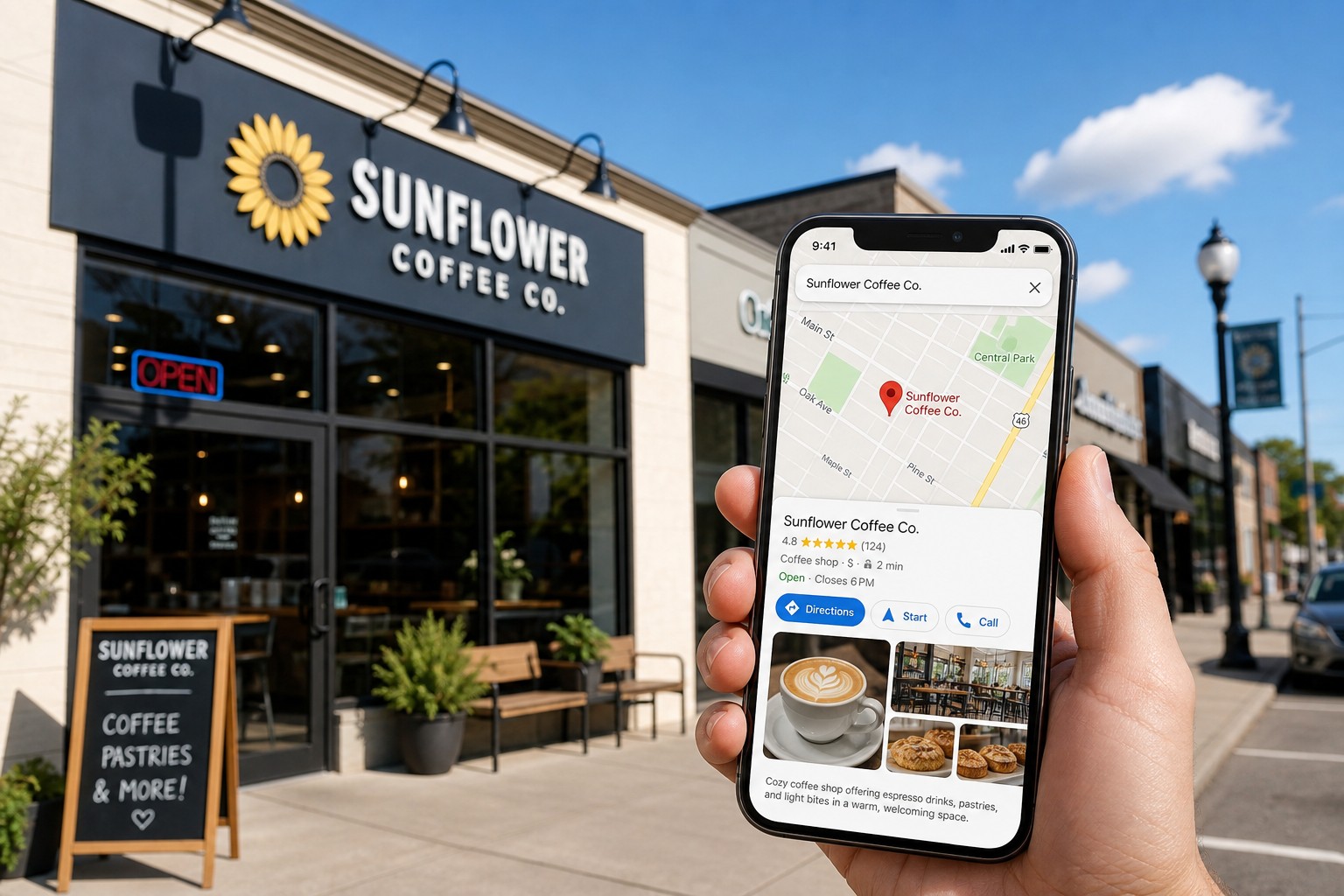
TL;DR:
- Optimizing your Google Business Profile (GBP) in 2026 requires more than filling in your business name and address. It demands a strategic approach to every section, from categories and services to photos, posts, and Q&A. Businesses that treat their GBP as a living, actively managed asset consistently outrank competitors in local search and AI powered results. This guide walks you through every step to get it right.
If your Google Business Profile still looks the same as it did two years ago, you are losing leads right now. Google has significantly expanded what GBP can do, and the businesses that take full advantage of those features are the ones showing up in the Local Pack, Maps results, and increasingly in AI generated search answers. A half completed profile is not just a missed opportunity. It actively signals to Google that your business is less relevant than competitors who have invested the effort. In this guide, we will show you exactly how to optimize every section of your Google Business Profile in 2026, with actionable steps, real examples, and a clear connection between profile optimization and local SEO performance.
Key Takeaways
| Point | Details |
|---|---|
| Complete every section | Google rewards profiles that are 100% filled out. Missing fields reduce your chances of appearing in local results. |
| Categories drive visibility | Your primary category is the single most influential ranking factor for Local Pack placement. |
| Photos and videos matter more than ever | Profiles with 100+ photos receive 520% more calls and 2,717% more direction requests than average. |
| Reviews require a system | Volume, recency, and owner responses all factor into rankings. You need a repeatable process, not occasional requests. |
| GBP feeds AI search | Google AI Overviews and other AI tools pull directly from well structured GBP data when answering local queries. |
Why Google Business Profile optimization matters in 2026
The local search landscape has changed dramatically. Research from BrightLocal shows that the Google Business Profile is the number one factor influencing local search rankings, ahead of on page signals, links, and even reviews. That means your GBP is not just a directory listing. It is your most powerful local marketing asset.
Here is what makes 2026 different from previous years:
- AI Overviews reference GBP data. When Google’s AI generates a local answer, it pulls business information, reviews, and attributes directly from your profile. An incomplete profile means you are invisible to AI search.
- Zero click searches dominate. More than 65% of Google searches now end without a click to any website. Your GBP is often the only thing a potential customer sees before making a decision.
- New GBP features require attention. Google has added product catalogs, service menus, messaging improvements, and enhanced attribute options throughout 2025 and into 2026.
- Competitors are catching up. What used to be a competitive advantage (simply having a complete profile) is now table stakes. You need to go further.
Understanding how your Google Business Profile connects to your broader local SEO strategy is essential. The two work together, and optimizing one without the other leaves significant results on the table.
Step 1: Claim, verify, and secure your profile
Before you optimize anything, make sure you actually own and control your profile. This sounds obvious, but a surprising number of businesses either have unclaimed profiles, duplicate listings, or profiles managed by former employees or agencies.
- Search for your business on Google Maps. If a listing exists that you did not create, claim it through the “Own this business?” link.
- Complete verification. Google offers verification by postcard, phone, email, or video depending on your business type. Video verification has become more common in 2026, so be prepared to do a live walkthrough of your location.
- Check for duplicates. Multiple listings for the same business confuse Google and split your ranking signals. Merge or remove any duplicates through Google Business Profile support.
- Secure access. Use a company owned email as the primary owner. Add trusted team members as managers, not owners. Review access quarterly.
Pro Tip: If you operate a service area business (SAB) without a physical storefront, you can still have a fully optimized GBP. Set your service areas by city, county, or zip code and hide your street address. Google treats SABs differently in the ranking algorithm, so getting this configuration right from the start is critical.
Step 2: Nail your business information
Every field in your GBP matters. Google uses this information to determine when and where to show your business. Incomplete or inconsistent information directly hurts your visibility.
Business name: Use your real world business name exactly as it appears on your signage, legal documents, and website. Do not stuff keywords into your business name. Google penalizes this and it can get your profile suspended.
Address and service area: For brick and mortar businesses, your address must be precise and match what is on your website and across all other directories. For local SEO to work properly, NAP (Name, Address, Phone) consistency across the internet is non negotiable.
Phone number: Use a local phone number rather than a toll free number. Google associates local numbers with geographic relevance, which directly impacts Local Pack rankings.
Website URL: Link to the most relevant page. For single location businesses, this is usually your homepage. For multi location businesses, link each GBP to its specific location page.
Hours of operation: Keep these accurate and update them for holidays, special events, and seasonal changes. Google tracks whether users encounter closed businesses during posted hours, and discrepancies hurt your profile’s trust score.
Step 3: Choose the right categories
Your primary category is arguably the most important single decision you will make for your GBP. Whitespark’s annual local ranking factors study consistently places GBP categories among the top three ranking signals.
- Primary category: Choose the one that most precisely describes your core business. “Personal injury attorney” is better than “lawyer.” “Italian restaurant” is better than “restaurant.” Be as specific as Google allows.
- Secondary categories: Add all relevant additional categories. A dental practice might include “cosmetic dentist,” “emergency dental service,” and “teeth whitening service” alongside “dentist.”
- Review competitor categories. Use tools like Pleper’s GBP audit tool to see what categories your top ranking competitors use. This reveals opportunities you might be missing.
| Industry | Weak Primary Category | Strong Primary Category |
|---|---|---|
| Legal | Lawyer | Personal Injury Attorney |
| Dental | Dentist | Cosmetic Dentist |
| Home Services | Contractor | Roofing Contractor |
| Food | Restaurant | Italian Restaurant |
| Automotive | Auto Repair | Transmission Repair Service |
Step 4: Write a keyword rich business description
Your business description gives you 750 characters to tell Google and potential customers what you do, where you do it, and why you are the best choice. This is prime real estate for natural keyword integration.
Here is what an effective 2026 GBP description includes:
- Lead with your primary service and location. “Big Fin SEO is a New Jersey based local SEO agency” immediately signals both what you do and where you do it.
- Include your core service keywords naturally. Do not force them. Write for a human who is evaluating whether to call you.
- Mention what differentiates you. Years in business, certifications, specialties, or unique processes.
- End with a clear value statement. What does the customer get? More visibility, more leads, more revenue.
Do not include URLs, promotional language (“best in town!”), or information that belongs in other fields (hours, phone number). Google may reject descriptions that violate their guidelines, and a rejected description means your old one stays up, which could mean no description at all.
Step 5: Add services and products
Google has expanded the Services and Products sections significantly. These sections are indexed, they appear in search results, and they give Google additional context about what queries should trigger your listing.
Services: Add every service you offer with a custom description for each. Google provides suggested services based on your category, but you can also add custom ones. Each description should be 150 to 300 words, naturally incorporate relevant keywords, and clearly explain what the service includes.
Products: If you sell physical products or defined service packages, add them to the Products section with photos, descriptions, and pricing. This section displays prominently on mobile and gives potential customers a reason to engage before visiting your website.
Building out these sections thoroughly is one of the most effective local SEO strategies available today. Most competitors skip this step entirely, which means every service you add is an opportunity to outrank them.
Step 6: Build your photo and video library
Visual content is one of the strongest engagement signals Google tracks for GBP. Google’s own guidelines encourage businesses to add photos regularly and note that businesses with photos receive more requests for directions and more clicks to their websites.
Here is what to include:
- Cover photo: This is the first image customers see. Make it high quality, well lit, and representative of your brand.
- Logo: Upload a clean, square version of your logo.
- Interior and exterior photos: Help customers recognize your location. These also verify your business exists at the stated address.
- Team photos: People trust businesses with faces. Show your team at work.
- Product and service photos: Show what you actually deliver. Before and after photos work exceptionally well for home services and dental practices.
- Videos: Short videos (30 to 60 seconds) of your business, team introductions, or customer testimonials. Google prioritizes listings with video content in 2026.
Pro Tip: Add new photos at least weekly. Google values recency in visual content the same way it values recency in reviews. A profile with 200 photos from two years ago performs worse than one with 80 photos that are regularly updated. Use geo tagged photos when possible, as they reinforce your location relevance.
Step 7: Master the review game
Reviews remain one of the top three local ranking factors, and their importance continues to grow. But optimizing for reviews in 2026 is about more than simply asking for them.
Volume: You need a steady stream of reviews, not a burst followed by silence. Google’s algorithm favors businesses that receive reviews consistently over time.
Recency: A business with 500 reviews but none in the last three months is less trusted than one with 100 reviews and 10 from this week. Set up a system that generates new reviews every week.
Response rate: Google recommends responding to all reviews, positive and negative. Your responses are indexed by Google and visible to potential customers. Treat them as mini pieces of content.
“Businesses that respond to reviews are considered 1.7x more trustworthy than businesses that don’t.” — Google
Keywords in reviews: When customers naturally mention your services or location in their reviews, it reinforces your relevance for those terms. You cannot (and should not) script reviews, but you can prompt specificity by asking questions like “What service did we help you with?” or “How did you find us?”
Building a review generation system is part of building a comprehensive local SEO foundation. The businesses that treat reviews as a marketing channel rather than a passive collection point consistently outperform their competition.
Step 8: Post regularly to your profile
Google Business Profile posts are short updates (up to 1,500 characters) that appear on your listing. They function like social media posts but for local search. In 2026, posts carry more weight than ever because Google uses them to determine profile freshness and activity level.
Effective GBP posting strategies include:
- Weekly updates: Share news, tips, or behind the scenes content. Aim for at least two posts per week.
- Offers and promotions: Use the “Offer” post type with clear start and end dates. These display prominently and drive immediate action.
- Event posts: If you host events, webinars, or workshops, create event posts with dates and registration links.
- Product highlights: Feature specific products or services with photos and descriptions that link to relevant pages on your website.
Each post should include a call to action button (Learn More, Call Now, Book, etc.) and link to a relevant page on your website. This creates a direct connection between your GBP activity and your broader SEO strategy.
Step 9: Use the Q&A section strategically
Most businesses ignore the Questions and Answers section entirely. That is a mistake. Anyone can ask and answer questions on your GBP, and those answers appear prominently in your listing.
Take control of this section by:
- Seeding your own questions. Ask and answer the most common questions customers have before they reach out. Think of this as a public FAQ that lives directly on Google.
- Monitoring for new questions. Set up alerts or check weekly. Unanswered questions (or worse, questions answered incorrectly by random users) damage your credibility.
- Including keywords naturally. Your Q&A responses are indexed by Google. A well written answer about your “emergency plumbing services in Newark, NJ” reinforces your relevance for that exact query.
Step 10: Track performance and iterate
Google provides detailed performance insights directly in your GBP dashboard. In 2026, these metrics include:
- Search queries: What terms people used to find your listing
- Views: How many people saw your listing on Search and Maps
- Actions: Calls, direction requests, website clicks, and messages
- Photo views: How your visual content compares to similar businesses
- Search type: Direct (branded) vs. discovery (non branded) searches
Review these metrics monthly. If discovery searches are low, your category and keyword optimization needs work. If views are high but actions are low, your photos, reviews, or description are not converting. Use the data to guide where you invest your optimization effort next.
Understanding how to interpret these signals and connect them to business outcomes is where professional local SEO support can make a measurable difference.
A smarter approach: GBP as your local growth engine
Here is the perspective most guides miss. Your Google Business Profile is not a set it and forget it listing. It is a living marketing channel that requires the same strategic attention you give your website, social media, or paid advertising.
The businesses that dominate local search in 2026 are the ones that treat GBP optimization as an ongoing process, not a one time project. They add new photos weekly. They respond to every review within 24 hours. They publish posts consistently. They monitor their Q&A section and update their services as their offerings evolve.
We have worked with businesses across New Jersey and nationally, from law firms and dental practices to home service companies and professional services, and the pattern is always the same. The businesses that invest in their GBP consistently generate more calls, more direction requests, and more website visits than competitors who rank for the same keywords but neglect their profile.
If your Google Business Profile is underperforming, the solution is almost never a single fix. It is a systematic approach to every element we have covered in this guide, applied consistently over time. That is how local search leadership is built.
Ready to optimize your Google Business Profile?
If you are looking to improve your local search visibility and turn your Google Business Profile into a genuine lead generation tool, we can help. At Big Fin SEO, local SEO is what we do best. From full GBP audits and optimization to ongoing management and review strategy, we give businesses the competitive edge they need in local search.
Whether you are just getting started or you need to overhaul a neglected profile, our team knows exactly what moves the needle. Get in touch today and let us build a local search strategy that drives real results.
Frequently asked questions
How long does it take to see results from Google Business Profile optimization?
Most businesses see measurable improvements within 4 to 8 weeks of implementing comprehensive GBP optimization. Initial changes like completing missing fields and adding photos can produce results within days. Category changes and review velocity improvements typically take longer to influence rankings.
Can I optimize my Google Business Profile without a physical location?
Yes. Service area businesses (SABs) can maintain fully optimized Google Business Profiles by defining their service areas and hiding their street address. The optimization strategies in this guide apply equally to storefront and service area businesses.
How often should I post to my Google Business Profile?
Aim for at least two posts per week. Consistency matters more than volume. A business that posts twice weekly for six months will outperform one that publishes 20 posts in a single week and then goes silent. Use a mix of updates, offers, and event posts to keep your content varied.
Do Google Business Profile reviews really affect rankings?
Absolutely. Reviews are one of the top three local ranking factors according to every major industry study. Volume, recency, diversity of keywords, and owner response rate all contribute to how Google evaluates your business against local competitors.
What is the connection between GBP optimization and AI search results?
Google AI Overviews and other AI powered search tools pull business information, attributes, and review data directly from Google Business Profiles when generating local answers. Businesses with complete, well structured profiles are significantly more likely to be referenced in AI generated search results, making GBP optimization essential for future visibility.

Michael Fleischner is the founder of Big Fin SEO, a New Jersey-based local SEO agency helping service-area and multi-location businesses increase visibility, generate qualified leads, and drive measurable revenue from search.
He is a TEDx speaker, Amazon-published author of The 7 Figure Freelancer, and a frequent speaker on SEO, AI-driven marketing, and personal branding.
 Corine R.
 Laura A.