

TL;DR:
- Most businesses generate more consistent online leads by building an integrated system rather than relying on isolated tactics. Defining an ideal customer profile and aligning marketing and sales goals are crucial steps before diversifying lead channels like content, paid ads, and AI tools. Optimizing landing pages and responding swiftly to inbound leads significantly increase conversion rates and overall pipeline success.
Most business owners know they need more leads. What they don’t know is why their current efforts keep producing inconsistent results. The answer almost always comes down to this: they’re running tactics instead of a system. Knowing how to generate leads online isn’t about finding one magic channel. It’s about building an integrated engine where each part reinforces the next. This article walks you through exactly that, from defining your ideal prospect to capturing, nurturing, and converting leads at scale.
Key takeaways
| Point | Details |
|---|---|
| Build a system, not tactics | Systematic lead generation produces 30%+ yearly growth versus 15% for disconnected approaches. |
| Define your ICP first | Knowing your ideal customer profile sharpens every channel decision and improves lead quality before you spend a dollar. |
| Diversify your channels | Using 3 to 4 complementary lead generation channels creates pipeline stability and reduces dependence on any single source. |
| Speed determines conversions | Responding to inbound leads within 5 minutes increases qualification rates by 10x compared to slower follow-up. |
| Optimize before you scale | High-converting landing pages and smart forms are what separate 2% conversion rates from 10 to 20% conversion rates. |
How to generate leads online: build the foundation first
Before you launch a single campaign, you need clarity on who you’re trying to reach. This is where most marketers rush past the preparation phase and pay for it later with low-quality leads and wasted spend.
Define your ideal customer profile and buyer personas
Your ideal customer profile (ICP) describes the type of company or person most likely to buy from you, stay with you, and refer others. Think firmographics: industry, company size, revenue, geography, and tech stack. Buyer personas go one level deeper. They capture the individual: their job title, daily frustrations, decision criteria, and what they search for when a problem gets urgent.
Getting both right means every piece of content you create, every ad you run, and every form you build will resonate with the right people rather than casting a wide net and hoping something sticks.
Understand lead qualification levels
Not every lead deserves the same attention. The three tiers you need to know are:
- IQL (Information Qualified Lead): Someone who downloaded a resource or visited your site. They’re curious but not ready to buy.
- MQL (Marketing Qualified Lead): Someone who engaged with multiple touchpoints and fits your ICP profile. Worth nurturing actively.
- SQL (Sales Qualified Lead): Someone who has shown clear buying intent, such as requesting a demo or pricing. Hand these to sales immediately.
Knowing where each contact sits in this framework prevents sales from chasing cold leads and marketing from ignoring warm ones.
Align marketing and sales goals from the start
Lead generation fails when marketing measures volume and sales measures revenue. Those two teams need to agree on what a qualified lead looks like, what the monthly lead targets are, and what the handoff process is. That alignment is what turns a lead generation funnel into a revenue engine rather than a numbers game.
Pro Tip: Set a shared dashboard where both marketing and sales can see lead volume, MQL-to-SQL conversion rate, and cost per lead in real time. Visibility eliminates blame.
Building your multi-channel lead generation engine
Successful teams use 3 to 4 complementary channels together rather than betting everything on one. The logic is simple. If one channel dries up, the others keep leads flowing. Here’s how to build that mix intentionally.

Content marketing and SEO
Content is the most durable lead generation asset you can build. A blog post optimized for a high-intent search query keeps attracting visitors for months or years without ongoing spend. The key is creating content that solves specific buyer problems rather than promoting your services. A topic cluster strategy, where a pillar page links to supporting content around related subtopics, builds topical authority faster and attracts qualified traffic over time.
Paid advertising and retargeting
Paid ads give you speed. While SEO compounds slowly, Google Search Ads and LinkedIn campaigns can put you in front of your ICP this week. Retargeting ads are especially powerful because they re-engage people who already visited your site but didn’t convert. A small retargeting budget often delivers the best cost-per-lead of any channel because you’re reaching a pre-warmed audience.
Lead magnets that filter for quality
A generic ebook rarely attracts serious buyers. A well-targeted lead magnet, such as a calculator, audit checklist, or industry benchmark report, does two things at once: it delivers real value and it pre-qualifies the person downloading it. Filtering leads with targeted, gated content avoids wasting resources on prospects who will never buy.
AI-powered tools and chatbots
Modern AI platforms analyze behavioral patterns to qualify leads in real time, routing high-intent visitors to live chat or booking flows while nurturing lower-intent visitors automatically. A chatbot on your pricing page that asks two qualifying questions before offering a demo can double your booked calls without adding headcount.
Here’s a quick comparison of channel characteristics to help you prioritize:
| Channel | Speed to leads | Cost | Lead quality | Longevity |
|---|---|---|---|---|
| SEO content | Slow (3 to 6 months) | Low ongoing | High | Very high |
| Paid search | Fast (same day) | Medium to high | Medium to high | Low (stops with budget) |
| LinkedIn ads | Fast | High | High (B2B) | Low |
| Lead magnets | Medium | Low | High | Medium |
| Chatbots/AI tools | Immediate | Low to medium | Medium | High |
Pro Tip: Start with one paid channel and one organic channel simultaneously. Paid generates data fast. Organic builds the asset that pays off long-term. Together they cover both speed and sustainability.
Designing landing pages that actually convert
You can drive excellent traffic and still lose most of it on a weak landing page. Optimized landing pages convert 10 to 20% of visitors while mediocre pages convert only 2 to 3%. That gap is not a small detail. It’s the difference between a campaign that breaks even and one that scales.
What every landing page needs above the fold
Before a visitor scrolls, they need to see three things: a headline that matches the ad or link they clicked, a subheadline that clarifies the specific benefit they’ll get, and a clear call to action. If those three elements are misaligned or vague, most visitors will leave in under 10 seconds.
Form length and progressive profiling
Shorter forms convert at higher rates. Start by asking only for name, email, and one qualifying question. Once someone has converted once, you can use progressive profiling to collect additional data in subsequent interactions. That way you’re always asking for the minimum needed without sacrificing the lead intelligence your sales team depends on.
Here’s what research supports on form performance:
| Form fields | Avg. conversion rate | Best use case |
|---|---|---|
| 1 to 2 fields | 15 to 25% | Top of funnel, content downloads |
| 3 to 4 fields | 10 to 15% | Webinar registration, free trials |
| 5 to 7 fields | 5 to 10% | Demo requests, high-value offers |
| 8 or more fields | Under 5% | Highly qualified B2B enterprise |
These numbers reinforce a core principle of online lead capture techniques: reduce friction for your best leads, not for everyone.
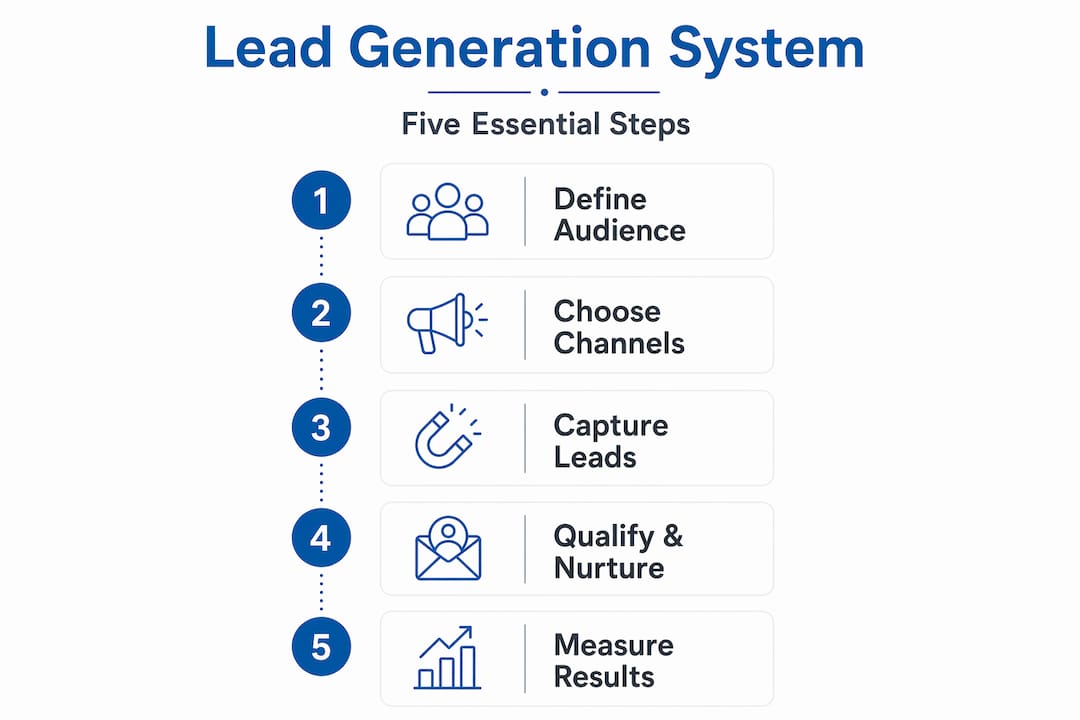
Nurturing and qualifying leads through the funnel
Getting a lead’s email address is the beginning, not the finish line. Companies that nurture leads properly see 50% more sales-ready leads than those who hand them directly to sales or let them sit idle in a CRM.
Here’s a five-step framework for building a nurture sequence that converts:
- Deliver the promised asset immediately. The first email arrives within minutes of the form submission. It delivers exactly what was promised and sets expectations for what comes next.
- Send a value email at day 2. Share a related piece of content that addresses a common question or objection your ICP has at this stage. No sales pitch yet.
- Tell a proof story at day 4. Use a case study or customer result to show, not tell, what working with you looks like. This builds credibility without sounding promotional.
- Address objections at day 6. A short, direct email that tackles the most common hesitations your prospects have. Price, time commitment, or technical concerns are good candidates.
- Make a clear offer at day 8. Only after building trust over the previous emails should you invite them to book a call, request a demo, or start a trial.
A standard nurture sequence of 3 to 5 emails is enough for most businesses to move prospects from curious to considering. Beyond that, segment your list by behavior. Someone who clicked your pricing page three times should get a different follow-up than someone who hasn’t opened anything since the first email.
Speed matters more than most people realize. Responding to leads within 5 minutes increases qualification rates by 10x. Set up automated routing so that when a high-scoring lead fills out a demo request form, it goes directly to a sales rep’s inbox within seconds, not into a weekly review queue.
Pro Tip: Use lead scoring models that combine behavioral signals (page visits, email opens, content downloads) with demographic fit (job title, company size). Score thresholds help you automate the MQL-to-SQL handoff without manual review for every lead.
Measuring results and optimizing over time
The reason systematic lead generation achieves 30%+ year-over-year growth versus the 15% ceiling of tactical approaches is not just execution. It’s iteration. The teams that win long-term are the ones that measure, learn, and adjust faster than everyone else.
The metrics worth tracking closely are:
- Cost per lead (CPL): How much you spend to acquire one lead, broken down by channel.
- MQL to SQL conversion rate: How many marketing-qualified leads actually become sales opportunities. A low rate signals a qualification problem.
- Lead-to-customer rate: The percentage of all leads that eventually close as customers.
- Speed to lead: How fast your first response reaches each inbound lead.
- Revenue per channel: Which sources are actually driving closed deals, not just leads.
Skip the vanity metrics. Follower counts and page views feel good but they don’t pay the bills. Focus on lead quality over quantity and tie every optimization decision back to revenue impact. Run A/B tests on your landing page headlines and form designs monthly. Review your channel mix quarterly. Small adjustments in high-volume areas compound quickly.
My honest take on what actually works
I’ve worked with enough businesses to say this with confidence: the gap between companies that generate consistent leads online and those that don’t is rarely about budget or tactics. It’s about mindset. Most struggling businesses treat lead generation as a campaign you run when sales slow down. The ones growing steadily treat it as infrastructure, something you build, maintain, and improve continuously.
The most common mistake I see is channel hopping. A business tries SEO for two months, sees no results, switches to paid ads, burns the budget, then tries social media, and eventually decides “nothing works.” What they missed is that each of those channels needed more time, more testing, and more integration with the others. Combining content marketing, referral programs, and targeted outreach creates a pipeline that doesn’t collapse when one channel has a bad month.
Speed to lead is the other thing most businesses underestimate. I’ve seen businesses with average offers and good follow-up out-convert businesses with great offers and slow follow-up. Automation fixes this. Set it up once and it pays off every day.
My honest recommendation: stop adding new tactics until the ones you have are actually working together. Chart your course clearly, anchor your efforts to the data, and stay the course long enough to see what the system can do.
— Big
Ready to build your lead generation system?
At Bigfinseo, we work with business owners and marketing teams who are done guessing and ready to build something that actually performs. Whether you’re just starting out with SEO for beginners or you’re looking to accelerate results with pay-per-click advertising, we can help you chart a course that turns traffic into qualified leads. Our team brings deep experience in search, paid media, and conversion optimization, so you’re not just getting advice. You’re getting a crew that executes alongside you.
If your website isn’t capturing the leads your business deserves, let’s change that. Explore how to optimize your website for search and start building the kind of online presence that works for you around the clock.
FAQ
What is the fastest way to generate leads online?
Paid search advertising, such as Google Ads or LinkedIn campaigns, delivers the fastest results because your offer appears in front of high-intent prospects the same day your campaign launches. Combine paid ads with a strong landing page and rapid follow-up for the best conversion rates.
How many channels should I use for online lead generation?
Research supports using 3 to 4 complementary channels simultaneously for pipeline stability. This prevents over-reliance on any single source and ensures leads continue flowing if one channel underperforms.
How do I convert more leads online once I have them?
Speed and relevance drive conversions. Respond within 5 minutes of a lead submitting a form, then follow up with a personalized nurture sequence of 3 to 5 emails that build trust before asking for a sale.
What metrics should I track for digital marketing lead generation?
Focus on cost per lead by channel, MQL-to-SQL conversion rate, speed to lead, and revenue per channel. These metrics connect your marketing activity directly to business outcomes rather than surface-level engagement stats.
What is the difference between an MQL and an SQL?
A marketing qualified lead (MQL) fits your ICP and has engaged with your content meaningfully but is not yet ready to buy. A sales qualified lead (SQL) has demonstrated clear buying intent, such as requesting a demo or comparing pricing, and is ready for direct sales outreach.

Michael Fleischner is the founder of Big Fin SEO, a New Jersey-based local SEO agency helping service-area and multi-location businesses increase visibility, generate qualified leads, and drive measurable revenue from search.
He is a TEDx speaker, Amazon-published author of The 7 Figure Freelancer, and a frequent speaker on SEO, AI-driven marketing, and personal branding.



 Corine R.
 Laura A.